History of Tenderloin, San Francisco
Location of Tenderloin SF
It is one of San Francisco’s neighborhoods found in the flatland's on the Nob hill slope. To the northeast, it is located between the union square district and the civic center to the Southwest. On the map, it resembles a large triangle with the point facing east. On the north, it borders Geary street, Mason Street on the east, and Van Ness Ave. on the west. The western part of Tenderloin was historically known as Little Saigon. If you happen to need a Tenderloin towing service while in Little Saigon, make sure to call us for quick service.
History
The neighborhood adopted its name from a neighborhood in New York which had similar characteristics. There are several explanations that people give to explain why the neighborhood was named Tenderloin. But the explanation states that the neighborhood experienced massive corruption and crime. Alexander S Williams, a New York police captain, was heard saying that he only afforded chuck steak while in New York. But after being transferred to this neighborhood, he had a lot of money that came from bribes, and now he could afford to eat tenderloin.
Since the California Gold Rush, which took place in 1849, the neighborhood was a downtown residential community. Before the 1930s, the neighborhood was known as Downtown, and it is the name that was documented on San Francisco maps.
The neighborhood was largely affected by the earthquakes and the fires that took place in 1906. However, the redevelopment works started immediately, and some hotels opened the following year. The historic Cadillac Hotel was opened in late 1907. Few more years, the nightlife dominated, and the neighborhood was once known for notorious activities such as prostitution and gambling.

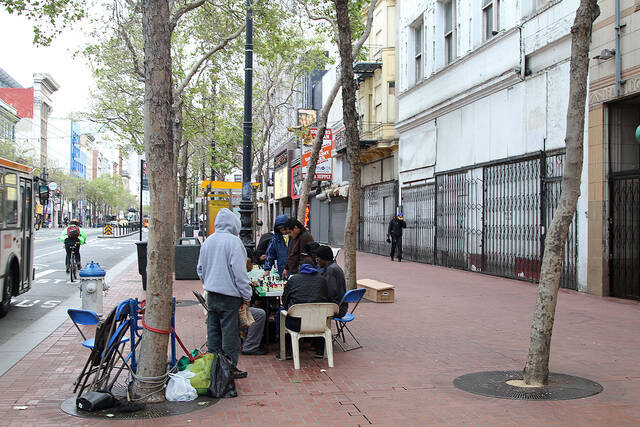
In the Tenderloin neighborhood, there are many residents in this area of San Francisco. There are also many businesses. So it is important to read all the signs on the streets so you don't get towed unnecessarily.
Due to the development in the neighborhood, the neighborhood had a lot of job opportunities. Musicians thrived well due to the rising numbers of theaters. Waiters and bartenders were also not left out. The musician union building found at Jones street housed many clubs, bars, burlesque houses, theaters, and hotels.
Following the end of the Vietnam war, in the late 1970s, the neighborhood welcomed refugees from southeast Asia. The low cost of housing by that time made it possible for the refugees to settle there. Henceforth, the population of the neighborhood increased drastically. The new residents opened restaurants and storerooms, which still exists up to now.
Characteristics
The neighborhood has resisted gentrification and continues to maintain a sordid character. The neighborhood has a high crime rate, prostitution, illegal drug trade, and strip clubs are over. This has given the neighborhood a bad reputation. However, part of the neighborhood is known for the large numbers of theaters present. Prominent and renowned theaters include the Geary, Golden gate Theaters, Orpheum Theaters, and the phoenix theater.
Crime
The neighborhood is known for the most crime in San Francisco. There are cases of high robbery and aggravated assault. According to the San Francisco police department, the neighborhood is ranked seventh out of the ten crime reports. As if that is not enough, the neighborhood is believed to be the origin of the Bahala Na Gang imported from the Philippines.
Illicit drugs and property crimes are some of the common problems of the neighborhood. Violent acts easily erupt here, and the situation has been escalating year by year.